Eden Centre shop rubbish collection insider tips High Wycombe
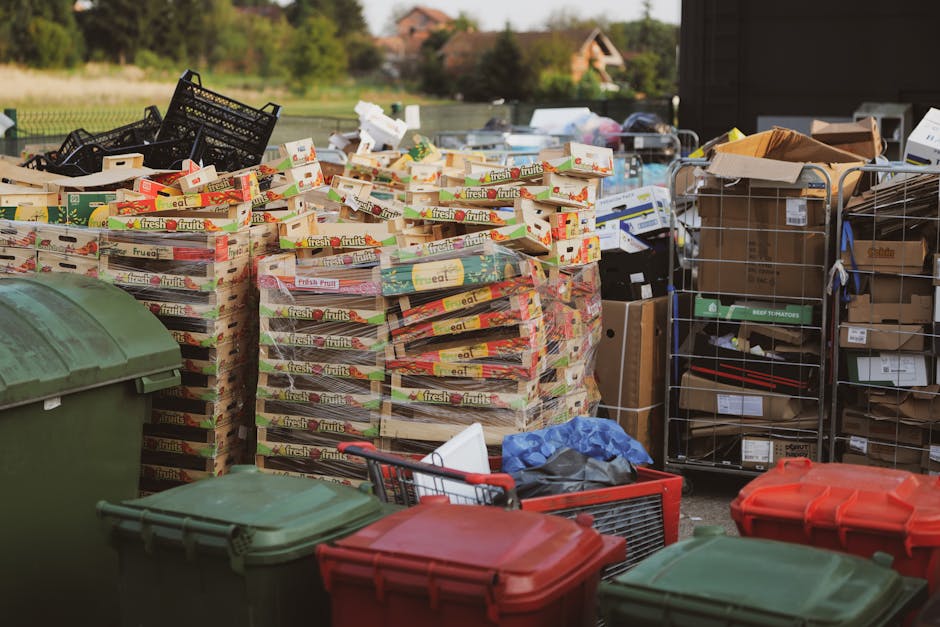
If you run or manage a shop near Eden Centre, rubbish has a habit of turning up faster than you expect. A few cardboard boxes by the till, a broken display, one awkward appliance in the back room, and suddenly the stockroom starts to feel smaller by the hour. The good news? With the right approach, Eden Centre shop rubbish collection insider tips High Wycombe can be a calm, tidy, and far less stressful part of your week.
This guide breaks down how shop waste collection works in a busy retail setting, what usually causes delays, and the small operational habits that make a big difference. You will also find practical checklists, a comparison table, and a realistic example from a local-style retail environment. No fluff. Just the stuff that helps on a Tuesday morning when the bins are full and the delivery cage is blocked.
Why Eden Centre shop rubbish collection insider tips High Wycombe matters
Retail waste is not just about keeping the shop floor neat. It affects staff flow, customer first impressions, stock handling, back-of-house safety, and even how smoothly a store can trade during peak hours. At Eden Centre, space is valuable. Every extra bag left in the wrong place feels bigger than it is. That is the reality.
When collection routines slip, problems build quickly. Mixed waste can attract complaints, cardboard can pile up near fire exits, and old fixtures can block access during deliveries. In practice, this means rubbish collection is not a background task. It is part of shop operations.
There is also a money side to it. Poorly sorted waste can mean higher handling costs, more collections than needed, and wasted staff time. A cleaner system often does not just look better; it works better. That is the bit many shops miss at first.
For businesses that want a more structured approach to waste handling, it can help to look at broader commercial support such as business waste removal and practical waste management guidance through waste removal. Those pages are useful if you are comparing a one-off clearance with an ongoing service.
Key point: good rubbish collection is not only about getting waste out of the building. It is about timing, sorting, access, and making the whole store easier to run.
How Eden Centre shop rubbish collection insider tips High Wycombe works
In most retail settings, shop rubbish collection follows a simple pattern: waste is created through trading, is sorted and stored briefly in a back-of-house area, and is then moved out by a collection team or internal staff. The part that sounds simple is usually the part that causes the mess, to be fair.
At Eden Centre, the practical challenge is fitting that cycle around customers, deliveries, opening hours, and shared access routes. You usually need three things working together:
- Clear waste streams so cardboard, general rubbish, packaging, and specialist items do not get mixed.
- Defined storage points so bags and bins do not drift into walkways or stock areas.
- Reliable collection timing so waste is removed before it creates a bottleneck.
For some shops, the waste is mostly everyday retail packaging and office-style rubbish. For others, there are fixtures, broken shelving, old stock, or refurb waste. That is where a broader service such as office clearance or furniture clearance may make more sense than simply treating everything as general waste.
One useful insider tip: do not wait until the bins are full before calling for help. A half-full but tidy collection point is much easier to manage than a room that has turned into a temporary storage cave. We have all seen that room. It starts with one spare trolley and ends with a cardboard skyline.
Another point worth noting is access. In retail environments, the best collection plan is the one that respects customer traffic, staff movement, and the practical limits of loading bays or rear access. If your waste team has to squeeze through a crowded back corridor every time, the whole operation becomes slower and more error-prone.
Key benefits and practical advantages
Done properly, Eden Centre shop rubbish collection gives you more than a cleaner space. It improves how the shop feels and how it runs. That sounds obvious, but the everyday payoff is real.
- Better presentation: customers notice tidy entrances, uncluttered stockrooms, and clean loading areas.
- Safer working conditions: fewer trip hazards, fewer blocked exits, and less chance of waste spilling into busy areas.
- Faster opening and closing routines: staff spend less time moving bins around or tidying last-minute clutter.
- More efficient back-of-house space: useful in compact retail units where every square metre matters.
- Lower risk of unpleasant smells and pest issues: especially where food packaging, organic residues, or wet waste are involved.
- Cleaner recycling habits: better segregation often means less confusion and fewer contaminated loads.
There is also a confidence benefit. Staff work better in a space that feels under control. Customers do too. Even if they never say it out loud, they absolutely notice when a shop feels organised rather than slightly chaotic around the edges.
If your waste includes bulky items like a smashed display unit or a worn-out counter, related services such as furniture disposal and mattress and sofa disposal can be relevant in certain fit-out or changeover situations.
Expert summary: the best waste collection plan is the one staff barely have to think about. If it runs quietly in the background, you have probably got it right.
Who this is for and when it makes sense
This topic matters to a wide range of people, not just store managers. If you are responsible for the practical side of a retail unit, waste collection probably sits on your list whether you like it or not.
- Shop managers who need a reliable routine for daily and weekly waste.
- Area and operations managers overseeing several units and trying to standardise processes.
- Franchise owners who want consistency across branches.
- Fit-out and refurbishment teams dealing with packaging, broken fixtures, and changeover waste.
- Small independent retailers who need a simple system without overcomplicating things.
- Landlords or unit managers who need a premises kept tidy between tenants or occupants.
It makes sense to act early if waste is already affecting stockroom access, fire safety routes, staff morale, or customer-facing tidiness. It also makes sense during seasonal peaks. You know the sort of thing: extra deliveries, more packaging, more returns, and less space than usual. December can be a bit ruthless, frankly.
If the issue is part of a wider property clear-out, a broader option like home clearance, house clearance, or even flat clearance may be useful for mixed-use stock or residential-style units. For a backroom, basement, or storage-heavy space, garage clearance and loft clearance can also be relevant if the area functions like a long-term catch-all.
Step-by-step guidance
Here is a practical way to get control of shop rubbish collection without making it complicated. Keep it simple. Simple usually wins.
- Map the waste streams. List the main types of rubbish your shop creates: cardboard, plastic wrap, general waste, damaged stock, old fittings, and any special items.
- Choose collection points. Decide where each waste type will live temporarily. Make sure the area is close enough to be useful but not in the way of customers or stock movement.
- Set collection times. Pick times that suit trading patterns. Early morning or after closing can work well, depending on access.
- Label bins clearly. Staff should not need to guess where something goes. If they have to think too hard, they will sometimes just put it anywhere. Happens all the time.
- Train staff briefly. A five-minute walk-through is often enough if it is practical and repeated when new team members start.
- Review once a week. Check whether the system still fits your actual waste volumes, not the volume you imagined six weeks ago.
- Escalate bulky items separately. Do not force large fixtures into routine waste handling if they are going to slow everything down.
A useful habit is to have one person on shift take a final look at the collection point before close. It is a tiny action, but it catches the awkward bits: loose wrapping, an overfilled bag, a broken box, or that one item someone swore they would move later. Later never comes, of course.
For larger or heavier retail waste, a structured service can be more practical than doing it piecemeal. If you are comparing options or need a clearer sense of costs, the pricing and quotes page is a sensible place to start.
Expert tips for better results
These are the little things that tend to separate a smooth collection routine from a frustrating one.
- Use the smallest practical bin size for the waste type. Oversized bins encourage lazy sorting. Smaller, well-placed bins create better habits.
- Keep cardboard dry. Wet cardboard is heavier, harder to handle, and much less useful for recycling.
- Break boxes down early. Flat cardboard takes up far less room and keeps walkways clearer.
- Store sharp or awkward items separately. A broken display shelf in a mixed bag is asking for trouble.
- Plan around delivery days. Waste collection and stock delivery should not compete for the same tight space if you can help it.
- Keep a spare set of liners and ties nearby. Running out of basic supplies at the wrong moment is one of those tiny disasters that feels bigger than it should.
- Use seasonal reviews. Waste output in a quiet month can look nothing like waste output in a promo-heavy week.
One shop supervisor once described the back room as "the place where good intentions go to collapse". Bit harsh, but not entirely wrong. The fix was surprisingly low-tech: clearer labels, one designated overflow point, and a proper collection time after closing. The room stopped fighting them after that.
If your rubbish includes specialist items like broken chillers or small appliances, then it is safer to separate them and use a specific service such as fridge and appliance removal. That saves you from trying to improvise something on the day.
Common mistakes to avoid
Most waste problems are not caused by one huge error. They are caused by five little ones that keep repeating. Annoying, but fixable.
- Letting mixed waste build up. Once everything is in one pile, sorting slows down and mistakes multiply.
- Putting collection points too far from the source. Staff will avoid the trip if the route is awkward. Humans, eh?
- Ignoring access constraints. A waste plan that works on paper may fail completely if trolleys, pallets, or customers block the route.
- Forgetting hazardous or specialist waste. Not everything should go into a routine load. That includes certain chemicals, aerosols, and broken equipment depending on the item.
- Leaving collections too late. If the stockroom is already bursting, the clean-up becomes slower and more expensive.
- Skipping staff communication. One person's "temporary" pile quickly becomes everybody else's problem.
A particularly common issue in retail is over-reliance on one person who happens to care a lot. That person becomes the unofficial waste manager, which is fine until they are off sick or on holiday. Then the whole system wobbles. Better to make the process obvious and shared.
And yes, someone will always say, "It'll be fine for now." Usually just before it is not fine at all.
Tools, resources and recommendations
You do not need a massive toolkit to manage shop rubbish properly. What you do need is a few reliable basics and a process that people can remember under pressure.
- Clearly labelled bins and sacks for separating waste types.
- Box cutters and tape dispensers for flattening packaging quickly and safely.
- Heavy-duty gloves for handling rough or awkward waste.
- Simple internal signage so staff know what belongs where.
- Rota notes or shift checklists to make responsibilities visible.
- Spare storage bins or cages for overflow during busy periods.
For businesses that want a stronger sustainability angle, the recycling and sustainability page is a useful reference point. It helps frame waste not just as something to remove, but something to handle more intelligently.
If your shop produces confidential paperwork, returns data, or staff records, you may also need something beyond ordinary waste handling. In that case, confidential shredding is worth considering so sensitive documents are dealt with properly.
For larger clean-outs or one-off project work, the broader book online option can be handy when you need to get something scheduled without much back-and-forth. Quick, practical, done.
Law, compliance, standards, or best practice
Retail waste handling in the UK is not only a practical issue; it also sits inside a wider duty of care. You do not need to become a compliance expert overnight, but you do need to avoid casual mistakes. Waste should be stored safely, separated where needed, and handed to a suitable carrier or service that can deal with it properly.
In plain English, that means a few sensible things:
- Do not leave waste where it could create a hazard for staff or customers.
- Keep recyclable material as clean as reasonably possible.
- Separate hazardous or specialist items instead of blending them into general waste.
- Make sure any contractor you use is suitable for the type of waste being removed.
- Keep your own internal process simple enough that staff actually follow it.
Best practice also means using your internal policies as a guide. If your business already has health and safety rules, align the waste routine to those rules instead of inventing a separate one that nobody remembers. The health and safety policy and insurance and safety pages are useful touchpoints if you want to think about risk in a more structured way.
If an item is damaged, sharp, heavy, or likely to leak, treat it with caution. That is the safest rule of thumb. Not glamorous, but it works.
Options, methods, or comparison table
Different shops need different collection methods. A small unit with light packaging has very different needs from a busy store with regular fixture changes or frequent stock rotation. Here is a straightforward comparison to help you judge what fits.
| Method | Best for | Strengths | Watch-outs |
|---|---|---|---|
| Routine bin collection | Everyday shop waste, packaging, and light back-room rubbish | Simple, predictable, easy for staff to learn | Can struggle with bulky items or peak trading periods |
| Ad hoc clearance | One-off clutter, move-outs, or post-refit waste | Quick relief when space is tight | Less efficient if used as a long-term fix |
| Specialist removal | Appliances, fixtures, furniture, or awkward items | Safer for heavier or more specific waste | Needs more planning and clear item separation |
| Full commercial waste support | Shops with ongoing, varied waste streams | More consistent, easier to manage across teams | Requires a better internal process to get the most out of it |
For many shops, the answer is not one method forever. It is a mix. Routine handling for the daily stuff, and a separate plan for the bulky, odd, or occasional items. That combination tends to work best in the real world.
Case study or real-world example
Imagine a fashion shop near Eden Centre coming out of a busy weekend promotion. The fitting rooms are fine, but the stockroom is not. Flattened cardboard is stacked too high, two broken garment rails are leaning by the wall, and a few bags of mixed packaging have been pushed into a corner "just for now".
On Monday morning, staff can still get in and out, but only just. Deliveries are due, the team needs a clear space for incoming stock, and the manager wants the back room tidied before the lunchtime rush. In this situation, the smartest move is not to keep pushing waste around the building. It is to separate the materials, clear the cardboard first, and arrange removal for the bulky rails and any damaged fixtures.
What changed the outcome was not a miracle. It was a small reset:
- cardboard flattened the same day it arrived,
- a clear overflow point introduced for busy weekends,
- broken items labelled and set aside immediately,
- one named person checking the collection point at close.
Within a couple of weeks, the shop was not wasting time playing bin Tetris every afternoon. Staff noticed the difference straight away. So did deliveries. Small improvement, big relief.
Practical checklist
Use this checklist before your next collection or clear-out. It is simple, but it catches most of the avoidable problems.
- Have all waste streams been separated where possible?
- Are cardboard boxes flattened and kept dry?
- Are collection points free from customer traffic and delivery blockages?
- Have bulky items been set aside clearly and safely?
- Are any specialist items identified before collection day?
- Do staff know who is responsible for closing checks?
- Is there enough space for bins or sacks not to overflow into walkways?
- Are labels or signs easy to understand at a glance?
- Has the collection schedule been matched to trading hours?
- Do you need a one-off clearance rather than routine collection?
If you can tick most of those without hesitation, you are in good shape. If not, that is useful too. Better to spot it now than when the back room has started to look like a storage joke nobody asked for.
Conclusion
Eden Centre shop rubbish collection insider tips High Wycombe come down to one simple idea: make waste handling easy enough that staff can follow it without effort, and organised enough that it never gets in the way of trading. That means clear sorting, sensible timing, safe storage, and a plan for bulky or specialist items before they become a problem.
The best shops do not treat rubbish as an afterthought. They build a routine that keeps the space working, day after day. It is not fancy, but it is effective. And on a busy retail floor, effective is what matters.
If you are reviewing how your shop handles waste, it is worth looking at the bigger picture too, from collection rhythms to clearance options and practical safety. Small changes can make the whole place feel lighter, calmer, and easier to run.
Get a free quote today and see how much you can save.
When the system is tidy, the day feels lighter. That is usually how you know you have got it right.
Frequently Asked Questions
What is the best way to manage shop rubbish near Eden Centre?
The best approach is usually a simple routine: separate waste streams, keep collection points close but out of the way, and remove waste before it starts affecting stock, staff movement, or customer-facing areas.
How often should a shop arrange rubbish collection?
That depends on trading volume, store size, and the type of waste created. Busy shops may need frequent collections, while smaller units can often manage with a steadier weekly rhythm plus ad hoc clearances when needed.
Can cardboard and general waste be collected together?
They can be handled together in some cases, but it is usually better to keep cardboard separate where possible. Clean, dry cardboard is easier to handle and typically easier to recycle.
What should shops do with bulky items like broken fixtures?
Bulky items should be separated from routine waste and dealt with through a more suitable clearance method. That may include furniture-related removal or a broader commercial waste service, depending on the item.
Is it better to use a one-off clearance or an ongoing waste service?
If your waste is regular and predictable, an ongoing service is usually easier. If you are dealing with a move, refit, or unusual backlog, a one-off clearance may be the better fit. Sometimes you need both.
How can I stop the stockroom from filling up with rubbish?
The most effective fix is to create a clear waste point, flatten packaging quickly, and give staff a short, repeatable process. Overflow happens when there is no obvious place for waste to go.
What if my shop produces confidential paper waste too?
That should be kept separate from ordinary rubbish. Confidential shredding is the safer route for sensitive paperwork, records, or printed information that should not go into general waste.
Are there any waste items that need special handling?
Yes. Certain appliances, chemicals, sharps, and other specialist items need more careful handling than standard retail rubbish. If you are unsure, separate the item and check before mixing it into a general load.
How do I know if my waste routine is working?
A good routine feels almost boring. The stockroom stays clear, bins do not overflow, staff know where things go, and collections happen without interrupting trading. If the process is creating friction, it probably needs a tweak.
What are the biggest mistakes shops make with rubbish collection?
The biggest mistakes are mixing waste types, leaving collections too late, blocking access routes, and assuming one person will always manage it. Waste systems work best when they are simple and shared.
Can waste collection help with recycling goals?
Yes. Better sorting and cleaner storage make recycling much easier to manage. It also reduces contamination, which is one of the most common reasons recyclable material becomes less useful.
Where should I start if my shop waste is already out of control?
Start with the messiest point first. Identify the main waste types, clear the obvious blockages, set one realistic collection routine, and separate anything bulky or specialist. Once the pressure is down, the rest gets easier very quickly.